
A busy team, a full client roster, and plenty of completed work don’t always add up to a healthier bottom line. Here’s where accounting firms can lose the value they’ve already earned.
It’s the end of the month, and a CPA firm owner is reviewing the numbers. The team has been busy, client work has gone out on time, and deadlines have been met. Yet revenue hasn’t grown as expected, and profit margins feel tighter than they should.
Where did the money go?
Sometimes, the problem isn’t a lack of clients or effort. It’s the value quietly lost between agreeing to do the work, delivering it, and getting paid for it.
The Work Keeps Growing. The Fee Doesn’t.
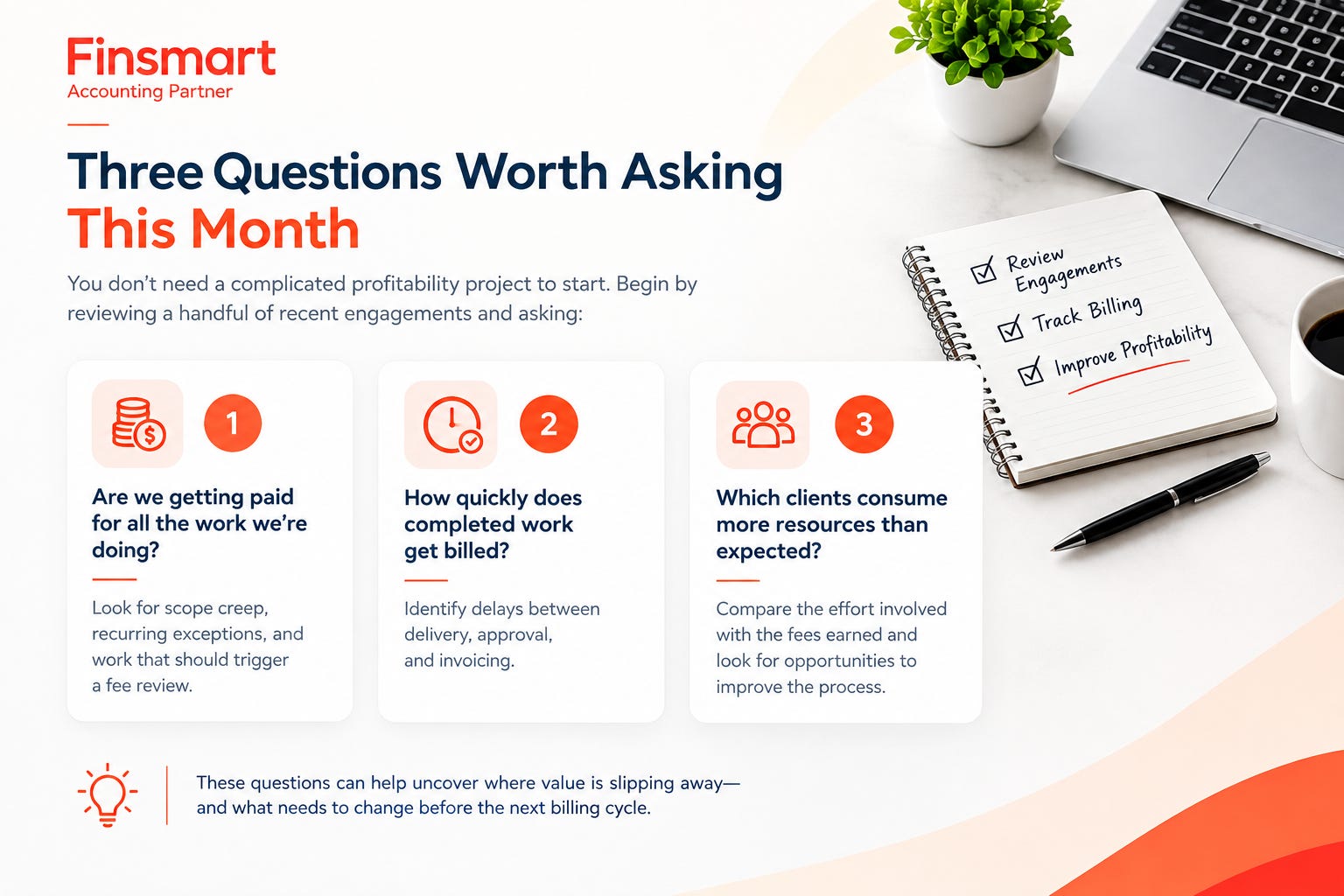
A bookkeeping client starts with a clearly defined monthly engagement. Over time, additional reports, extra meetings, and small requests become part of the routine. The team accommodates them because each request seems reasonable.
Months later, the firm is spending considerably more time on the account, but the fee hasn’t changed.
This is how scope creep eats into profitability. The firm delivers more without necessarily earning more.
What firms can do:
Define what’s included in each engagement and what’s considered additional work.
Track recurring requests that fall outside the original scope.
Revisit pricing when client needs or workloads change.
Being helpful to clients matters, but good service shouldn’t mean unlimited work for the same fee.
The Work Is Finished. The Billing Isn’t.
Imagine an accountant who completes an engagement, gets the work reviewed, and moves on to the next deadline. The invoice, however, sits in someone’s task list because a final approval is pending or nobody owns the next step.
Multiply that delay across several clients, and completed work can remain unbilled longer than necessary.
The revenue may not be lost, but the delay can affect cash flow and create avoidable administrative work.
A few simple fixes can help:
Assign clear ownership for billing once work is completed.
Connect invoicing to the delivery workflow.
Review completed but unbilled engagements regularly.
The work isn’t truly through the process until the billing step has been addressed.
Your Best Clients May Not Be Your Most Profitable
Two clients might pay the same monthly fee, but one provides documents on time and follows the agreed process. The other needs repeated reminders, requests frequent revisions, and regularly pulls senior accountants into routine tasks.
On a revenue report, they look equally valuable. In practice, they may have very different costs to serve.
Revenue tells you what a client pays. Profitability tells you what it takes to serve them.
Look beyond the fee and consider the time involved, rework, senior staff dependency, and whether the engagement still matches its original scope. Some demanding clients are worth the effort, but firms need to understand the trade-off rather than assume every high-revenue account is equally profitable.
Being Busy Doesn’t Always Mean Being Efficient
When margins come under pressure, the natural response is often to pursue more clients. But if the existing workflow is full of rework, unclear handoffs, and unnecessary follow-ups, adding more engagements can amplify the problem.
The team gets busier, delivery costs rise, and profitability may barely improve.
This is where firms need to look at how work gets done—not just how much gets completed.
In our related article, Can Accounting Firms Reduce Working Hours Without Hurting Profitability?, we explore how improving the way work is structured and delivered can help firms protect profitability without simply asking their teams to work more hours.
Stop Measuring Work Alone. Start Measuring What It Returns.
A firm can meet every deadline, keep every accountant busy, and grow its client roster while still missing opportunities to improve profitability.
The answer isn’t always more clients or longer hours. Sometimes, it’s clearer engagement boundaries, better billing processes, and a more efficient way to deliver the work already on the books.
The real question isn’t just how much work your firm completes. It’s whether that work is creating the value your firm expects.
What has the biggest impact on profitability in your firm: scope creep, delayed billing, or the hidden cost of serving certain clients?